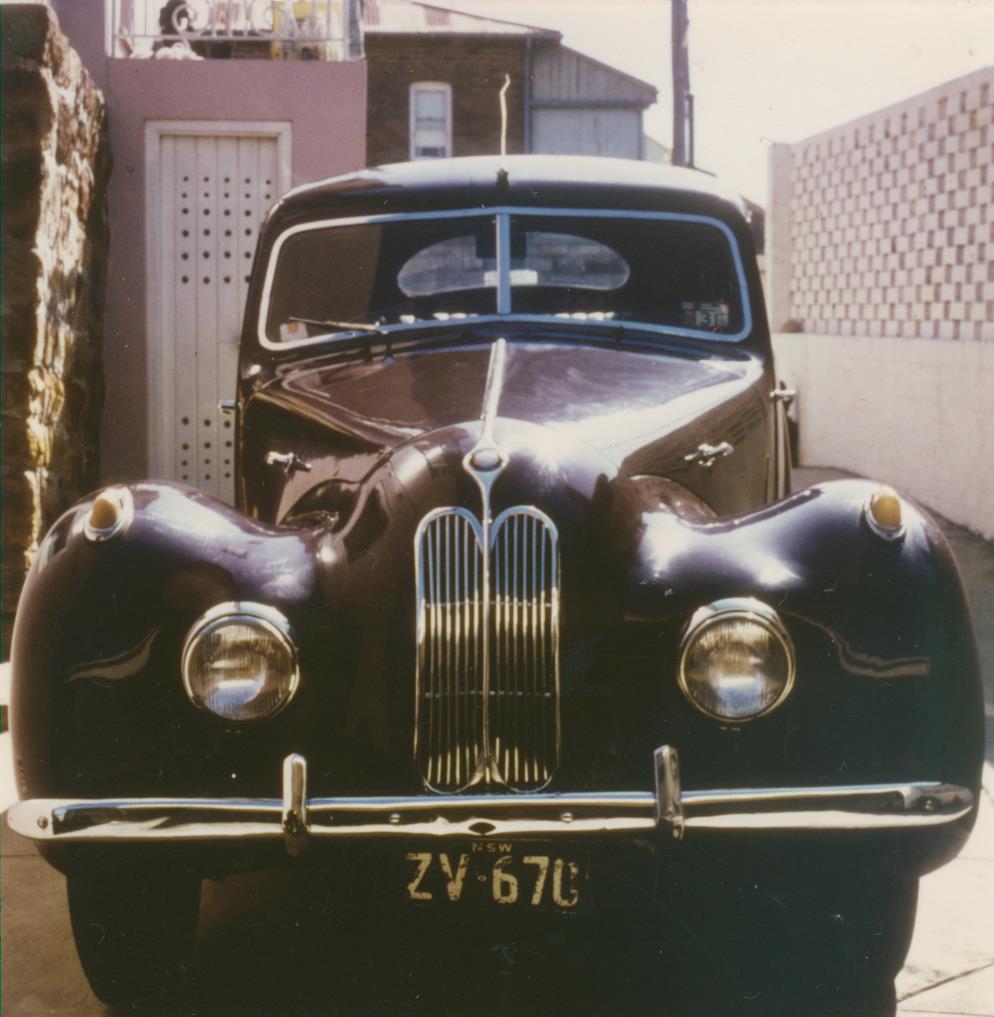
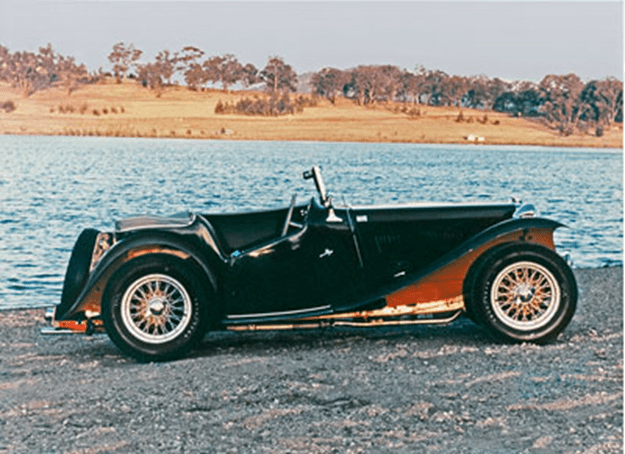
Perhaps it was the morning I had spent on Bondi Beach that made me particularly aware of curvaceous bodies that fateful day. I was only eighteen after all in March 1965. Perhaps it was a sudden access of good taste that led me to screech to halt in my ‘hot’ green and gold MG TD outside a private garage in the Sydney suburb of Waverly. The rear of a fascinating classic car with a kidney-shaped rear window and covered spare wheel was just visible to the naked eye. I went over for a closer look at what turned out to be a marvellously proportioned, elegant and distinctive two door coupé. I was vaguely aware of the name ‘Bristol’ from the ‘Observer Book of Motor Cars’ which I had committed to memory, but that was the full extent of my knowledge.
The mid-sixties in Australia was the glorious era of saloon car racing and touring car championships, notably the phenomenal Bathurst 500 (mile) race at the Mount Panorama Circuit. Ford Falcon V8 GTs diced with the new Holden Monaro GTS and Jaguar Mk IIs to eclipse the smaller Alfa GTVs and Mini Coopers in races so exciting they literally took your breath away. It was also the golden age of antipodean motor sport. My father was Chief Medical Officer at the Warwick Farm racecourse, a racing circuit that functioned in a Sydney suburb from 1960 to 1973. We lived in the pits and ate in ambulances at circuits all over Australia. He had also been a RAAF instructor on Tiger Moths in Papua New Guinea during the war and set out to infect his son with a passion for exotic machinery. He succeeded admirably, to my prodigious financial cost over the years.
The Tasman Series also attracted some of the greatest international drivers of the day. The Australian Grand Prix was held at the Farm in 1963 and 1967, attracting the likes of Jim Clark, Piers Courage, Chris Amon, Graham Hill and Jackie Stewart (winning in 1967 in the fabulous sounding BRM P261 – no, not as shattering a sound as the V16). I can just remember Jack Brabham (incidentally a RAAF flight mechanic towards the end of WW II maintaining Bristol Beaufighters) winning the 1955 Australian Grand Prix at Port Wakefield north of Adelaide in a ‘Bobtail’ Cooper-Bristol. I also watched him spectacularly avoid fairy penguins that had strayed onto the track at Cowes, Phillip Island (140 kms south of Melbourne) when he won the 1960 Moomba trophy in a T 51 Cooper Climax. I really was not interested in such things as a twenty year old gentleman’s luxury express made by the Bristol Aeroplane Company. It was only much later that I discovered it to be one of the very first pure Gran Turismo sports cars. How misguided one can be in youth.
‘Gday mate. Want to buy her? She’s a little ripper – a real beaut!’
The voice belonged to a pensioner with a face the colour of tanned leather and maniacally scratching his bottom. An old Sydneysider.
‘But what is it?
‘A Bristol 400 old son. Belonged to the newspaper magnet Sir Warwick Fairfax. Luxury there mate!
The Fairfaxes were a wealthy Australian establishment family who founded the oldest and largest Australian publishing empire. Sir Warwick, the colourful pater familias, clearly loved Bristol cars and the ladies that inevitably accompanied him in them. He was a writer and powerful publisher belonging to a particular era of Sydney society, ‘a time of parlour games and finishing schools, languid holidays at Palm Beach, of Romano’s and Prince’s restaurants, the Black and White Ball…’. A suitable environment for Bristol 400.
I drove the MG home that day to Beach Street Coogee in a thoughtful frame of mind. I could not get the racy lines and luxurious interior of the Bristol out of my mind. The extraordinarily advanced engineering and detailed features were remarkable: tiny roller blinds to the windows, one shot lubrication system, hemispherical combustion chambers, three downdraught SU carburettors, transverse leaf spring on the front suspension, comprehensively instrumented dash and split windscreen like a fighter aircraft, beautiful unmarked beige leather piped burgundy.
I did what I thought was a crazy thing at the time. I sold the TD (a real ‘bird puller’ with bonnet straps, a ported and polished head and a gearbox that jumped out of third on the overrun but which I neatly held in with my left knee) and bought the Bristol. As I was a university student at the time I parted in some trepidation with what I considered to be the inordinate sum of A£250 for the maroon, slightly louche, luxury GT (decimalisation was introduced in 1966, so around A$2,500 in 2022) It seemed financial suicide. My father, a confirmed Jaguarist, was appalled.
I drove the 400 a great deal while at university. The club interior of such English cars can have ventilation problems in the searing heat of a Sydney summer. They are not a beach car. I missed the sheer fun of open air motoring along the coast in the MG T series. But the Bristol turned out to be a marvellous long-distance touring car as I discovered on one formidable and memorable journey along the Great Ocean Road to Adelaide. The car also attracted a far more demure, refined and intellectual type of girl into my ken compared to the sandy, bronzed athletic beauties who usually clambered ‘commando’ into the MG.
One in particular who loved the Bristol was an artist with cascading Venetian blonde hair who on formal occasions wore long black lace gloves. She spoke French and insisted I take her a piano recital in the Town Hall to hear the great Polish pianist Artur Rubinstein. It was the first concert of classical music I ever attended – something almost unbelievable today after thousands of recitals in London and now living in Warsaw in Poland under the sublime influence of Fryderyk Chopin. This was years before the Sydney Opera House opened (which certainly deserves a Bristol 400 in the car park whenever Don Giovanni is staged). As I was studying English and Philosophy we read Shelley and Keats beside still ponds lying on a tartan rug beside the car, a then affordable bottle of Lake’s Folly Chardonnay to hand.
Yet there was something of the sinister film noir and a Raymond Chandler atmosphere about this dark car which fascinated me on the nights I drove into the red light district of Woolloomooloo through the sea-misted small hours and sodium-lit wharves of the inner harbour. A maroon Bristol 400 parked at 3.00 am in the gloom near the gates of the Naval Dockyard near the legendary Harry’s Café de Wheels was decidedly cinematic. Swarthy types loitered menacingly, Craven A cigarettes dangling from lower lips.
Incidentally, the name Café de Wheels came about in keeping with a Sydney City Council regulation. Mobile food caravans had to move a minimum of 12 inches each day. The cart had been constantly moved by the city council over past years but is now, sans roues fonctionnelles, permanently refurbished with al fresco seating but still serving the famous ‘Tiger’ Australian meat pie with mushy peas. Local legend holds that the name was temporarily changed to Café de Axle at one point when the wheels were stolen.
In the ‘swinging sixties’ I also remember the Bristol providing a safe haven for a painter and his beautiful girlfriend who enjoyed a mild LSD trip in Sydney’s Centennial Park, spellbound for hours by reflections on the water and ants crawling up blades of grass. No, I never touched the stuff but did watch ‘the best minds of my generation destroyed by madness….’ as noted by Allen Ginsberg. On pic-nics in the sand beside the creamy waves of the South Pacific the racy lines of the Bristol moved me into Errol Flynn mode and to quote the popular Australian expression, resistance collapsed and I was ‘in like Flynn’. I put the sensual success all down to the car. Driving over dunes to remote and romantic rendezvous near Whale Beach twice removed the exhaust system, transforming the elegant machine into a scarcely legal, rorty beast. The car contributed to subtle changes in my evolving personality, confirming vaguely held beliefs concerning the positive qualities of understatement and discrimination.
Et in Arcadia Ego. As time passed increasingly large volumes of blue smoke indicated all was not well with the tired engine which had by then completed some 180,000 miles of sterling service. With faint heart (knowing they were built to Rolls-Royce standards) I rang the only known Bristol engineer in Sydney to discuss the cost of a rebuild. He was a gruff military type who spoke to me in stentorian tones.
‘The workshop manual weighs 15 lbs on the scale, do you hear, on the scale. The work cannot be cheaply achieved whatever you might think.’
My father had already generously paid for one engine rebuild on the TD so I did not press for another. I took immediate fright (being a poverty-stricken student) and decided to sell the car.
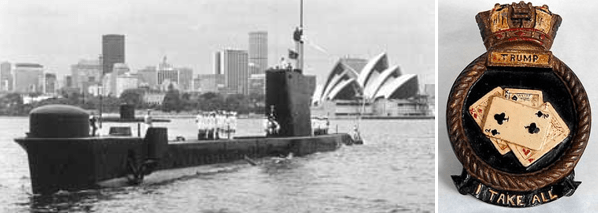
Within a certain narrow temperature band the exhaust remained crystal clear. I endeavoured to keep the car at this temperature, carefully staggering the appointments to view. Lieutenant John (Jack) Winterbottom, the Commander or perhaps the First Officer of HMS Trump, decided to buy the car. His vessel was a Taciturn Class submarine laid down in 1942 and serving at that time with the 4th Submarine Flotilla in Sydney, the last British link with the Royal Australian Navy. A clue to his character lay in the unofficial crest of HMS Trump which hung on the Commander’s door. It has the motto ‘I Take All’ beneath spread playing cards (three kings and a deuce).
I like to think that a certain ‘press on’ adventurous type of English gentleman still buys a Bristol in preference to other classic marques; an intelligent connoisseur of engineering, individualistic, stylish yet understated, discriminating yet wanting to unobtrusively cut a dash. On my last sad day in its distinguished company (selling cars is always an emotional wrench for me) I watched the 400 dissolve in an increasingly pale blue haze reminiscent of the Blue Mountains. Clearly he was an officer and a gentleman as he never returned to complain of my questionable behaviour or the smoke.
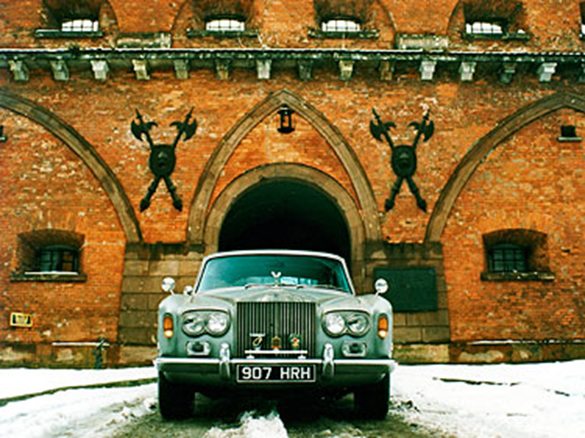
The 1974 Royce Silver Shadow before the entrance to the Citadel, Warsaw 1993
Away from the Bristol’s civilising influence I soon reverted to type and left Sydney to live on Norfolk Island, a thousand miles north-east of Sydney, among the descendants of the mutiny on the Bounty and once inhabited by the threatening ghosts of the brutal convict prison past. I set up a restaurant, one of the first on the island, and ran the broadcasting station. I bought a green MGA 1600 and painted it Equipment Orange with some left-over paint from the abandoned Second World War airfield. A horse destroyed it by jumping on it from an embankment the day I left the island years later for London. Memories of my Bristol 400 faded into the ether as the years flew by until I read that on the 18th September 1998, exactly 50 years to the day since the Goodwood Circuit first opened. The 9th Duke’s grandson, the present 11th Duke of Richmond, re-enacted the opening of the track at the first Goodwood Revival meeting. He drove the same Bristol 400 that his grandfather (known informally as ‘Freddie’ March) had used half a century earlier on the same track, a place at that time untouched by the modern world. Then I saw the magnificent restoration of JEL 450 by Ashley James and his son Richard.
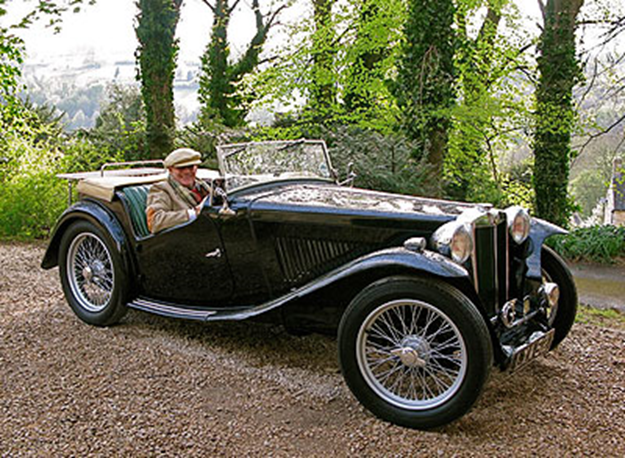
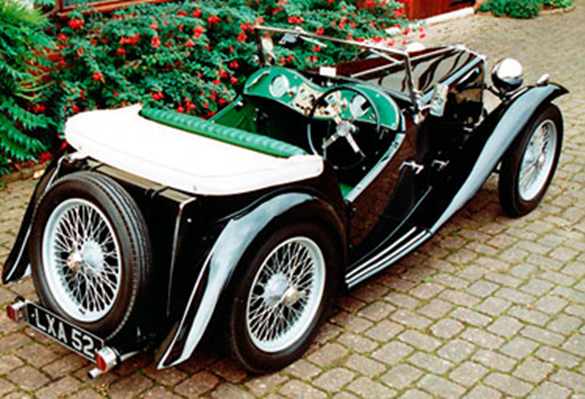
My motoring life has embraced many classic cars since those halcyon days. I have owned my original 1974 Rolls-Royce Silver Shadow (907 HRH) for 36 years now and my present concours 1949 MG TC (LXA 52) brings back fond memories of the old days of ease and negligence. But my ownership of the Bristol 400 Chassis 319 for eighteen months in Sydney as a young man taught me the irresistible nature of quality motor cars. Once a Bristol 400 is fully experienced it can never be forgotten and how I still yearn for another chance, a chance to look after one properly this time around.
Michael Moran
www.michael-moran.net
 Bristol Owners Heritage Trust